Somnath temple timings: darshan, aarti and light show
Darshan at Somnath runs from 6:00 AM to 10:00 PM, with aarti at 7:00 AM, 12:00 noon and 7:00 PM and the Jay Somnath light and sound show at 7:45 PM.
- Darshan
- 6:00 AM to 10:00 PM
- Morning aarti
- 7:00 AM
- Midday aarti
- 12:00 noon
- Evening aarti
- 7:00 PM
- Jay Somnath light and sound show
- 7:45 PM
Somnath temple timings at a glance
These are the regular daily timings published by Shree Somnath Trust. They are the same every day of the week, but they can change on festival days, so treat them as the normal pattern rather than a promise.
| What | Time | Notes |
|---|---|---|
| Darshan | 6:00 AM to 10:00 PM | The temple is open for darshan through the day. |
| Morning aarti | 7:00 AM | Calmer than the evening; the best time for a first darshan. |
| Midday aarti | 12:00 noon | Short and often less crowded; hot outside for much of the year. |
| Evening aarti | 7:00 PM | The busiest aarti of the day. Arrive early. |
| Jay Somnath light and sound show | 7:45 PM | Begins after the evening aarti. |
Timings are as published by Shree Somnath Trust and can change on festival days, during Shravan and on Mahashivratri. Check at the temple or on somnath.org before you set out.
The three daily aartis
Aarti is offered three times a day: at 7:00 AM, at 12:00 noon and at 7:00 PM. Each is a short, intense ceremony of lamps, bells and chanting before the Jyotirlinga, and each has its own character.
Morning aarti, 7:00 AM
The morning aarti is the one we recommend for a first darshan. The air is cool, the crowd is smaller than in the evening and the day is still ahead of you. Darshan opens at 6:00 AM, so if you arrive at the gate around then you will usually be inside well before the aarti begins.
Midday aarti, 12:00 noon
The noon aarti is often the least crowded of the three, partly because the middle of the day is hot for much of the year. If you are staying close by it is easy to attend and then retreat to the shade of your room.
Evening aarti, 7:00 PM
The evening aarti draws the largest crowd of the day, with the sea darkening behind the temple and the lamps lit in front of the Jyotirlinga. Plan to join the queue at least half an hour early, and longer on weekends, holidays and in the month of Shravan.
The Jay Somnath light and sound show
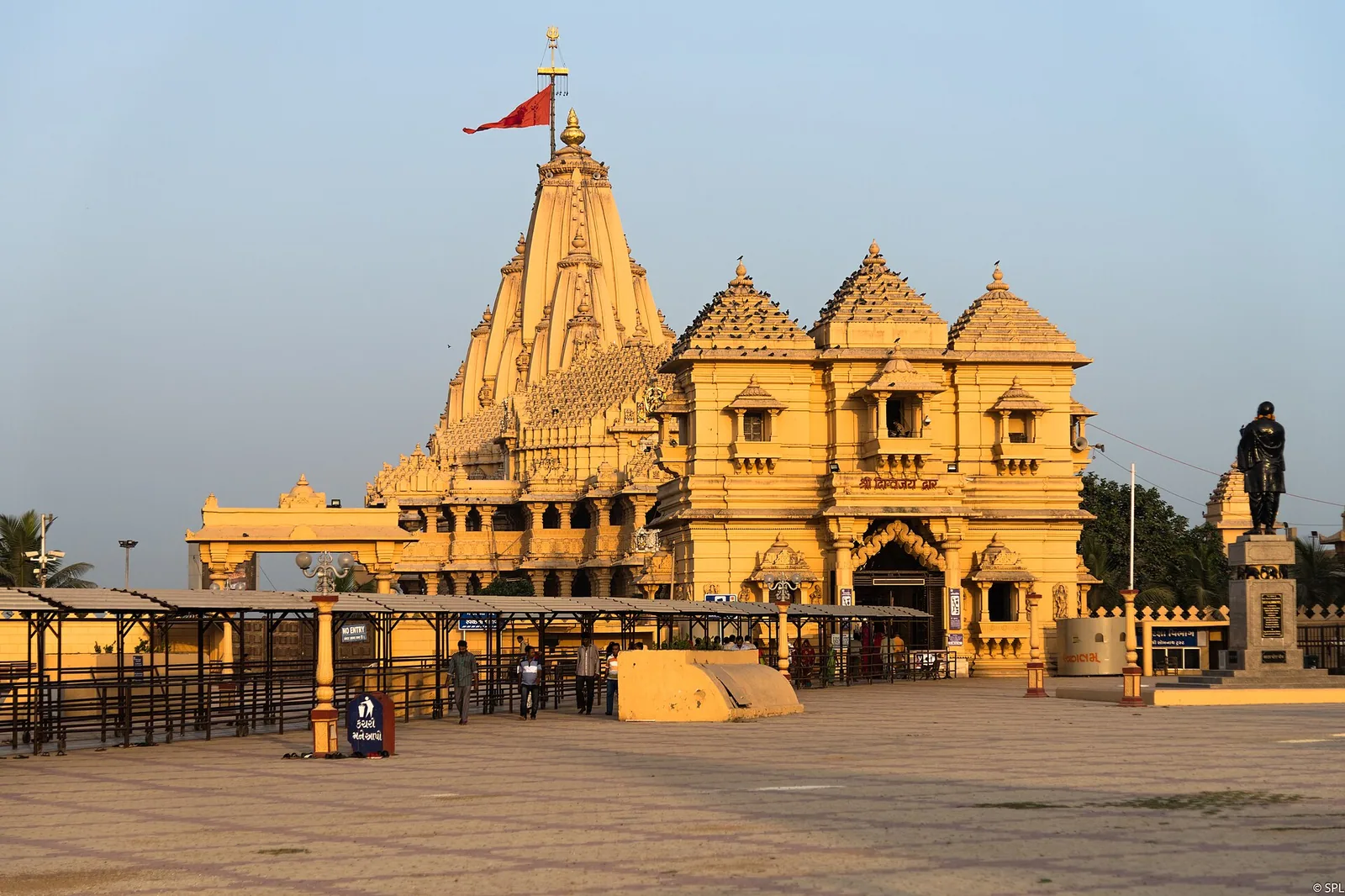
After the evening aarti, at 7:45 PM, the temple hosts the Jay Somnath light and sound show, which tells the story of Somnath: its sanctity, its destruction and its rebuilding, with the temple and the sea as its backdrop.
Tickets are sold on site. We do not print a price because it is set by the Trust and can change, and the show can be cancelled in bad weather or adjusted on festival days. Ask at the temple counter on the day. Because the show ends after dark, the five minute walk back to Sagar Darshan is a real advantage, and the restaurant at the guest house stays open until 11:00 PM.
A day of darshan from Sagar Darshan
Staying about 400 m from the temple means you can attend every aarti without arranging transport. This is how a full day can look:
| Time | Plan |
|---|---|
| 5:45 AM | Leave the guest house. The walk is about five minutes. |
| 6:00 AM | Darshan opens. The first hour is usually the quietest. |
| 7:00 AM | Morning aarti. |
| 8:00 AM | Walk back along the shore; breakfast. |
| 10:00 AM to 4:00 PM | Visit Triveni Sangam or Bhalka Tirth, then rest in your room through the heat. |
| 12:00 noon | Midday aarti, if you would like to attend all three. |
| 5:30 PM | Baan Stambh and the beach as the light turns. |
| 6:30 PM | Join the queue for the evening aarti. |
| 7:00 PM | Evening aarti. |
| 7:45 PM | Jay Somnath light and sound show. |
| Before 11:00 PM | Dinner at the pure vegetarian restaurant, which closes at 11:00 PM. |
For the full two day version, including Triveni Sangam, Gita Mandir and the Prabhas Patan Museum, see our Somnath 2 day itinerary.
Festival days and crowds
The regular timings above change on the biggest days of the temple calendar, and the crowd can be many times larger than usual. Plan for these in particular:
- Mahashivratri, which falls in February or March, is the most important night of the year at a Jyotirlinga. Timings are extended or changed and queues can be very long.
- Shravan, the monsoon month sacred to Lord Shiva, usually in July and August, brings large crowds, especially on Mondays.
- Kartik Purnima, in October or November, is marked by a large fair at Somnath that lasts several days.
The exact dates follow the Hindu lunar calendar, so check them for the year you are travelling. On these days rooms near the temple fill early; if your dates fall on one, send your enquiry as soon as you know them. Our guide to the best time to visit Somnath goes through the year season by season.
What to carry and what to leave in your room
- Expect security screening at the gate, and restrictions on phones, cameras and bags inside the temple. The rules are set by Shree Somnath Trust and posted at the entrance; follow what is posted on the day.
- The simplest answer is to leave phones, cameras and bags in your room. Staying five minutes away makes that easy.
- Footwear is removed before entering. Wear sandals that slip off easily.
- Dress modestly, with shoulders and knees covered.
- Carry water for the queue, especially before the midday and evening aartis.
- If you are travelling with elders, plan for the morning aarti, when the crowd is smallest and the air is coolest.
Where these timings come from
The darshan, aarti and show timings on this page come from the public pages of Shree Somnath Trust. The Trust's own website, somnath.org, is the official source and carries announcements for festival days. This page was last reviewed on 21 October 2026. If you find a timing that has changed, please let the reception know so that we can correct it.
Staying nearby? Sagar Darshan is a five minute walk from the temple
Every room at Sagar Darshan Guest House faces the sea, and the Somnath Jyotirlinga is about 400 m away on Somnath Mandir Road. Walk over for the morning aarti, rest through the afternoon and come back to a pure vegetarian dinner after the evening show.